Welcome to the POWER Lab
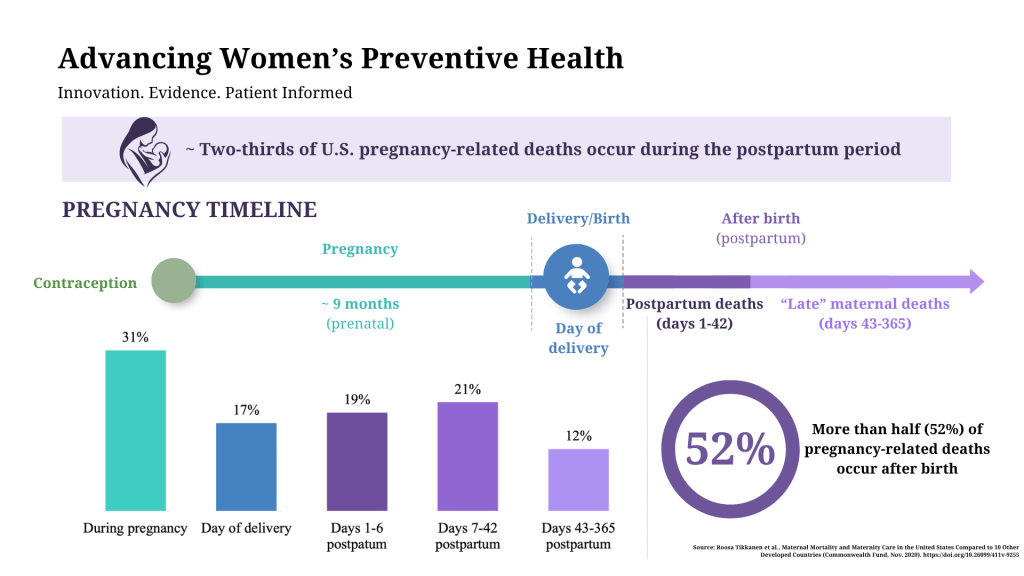
The Prevention Science Outcomes in Women’s and Early Reproductive Health (POWER) Lab at the George Washington University uses clinical and patient centered approaches to advance chronic disease prevention in maternal and women’s health.
Our goal is to ensure an engaging pathway for women’s voices so they can provide their perspectives about research priorities that will help them live the longest and healthiest lives possible.
Our Values
Our research and team are grounded in evidence-based approaches, driven by innovation, and informed by patient perspectives.

Evidence-based
Our research is grounded in rigorous scientific evidence to ensure findings are reliable and clinically meaningful, leading to real improvements in women’s health.

Innovation driven
We advance women’s health by developing and applying innovative approaches that address complex and emerging health challenges.
Patient informed
We center patients’ voices and lived experiences to ensure our research reflects real needs and outcomes, leading to meaningful improvements in care.
Our research is guided by

Our Mission
To conduct patient-informed high-quality clinical intervention trials and cohort studies to prevent chronic disease in the maternal-infant dyad and improve women’s health across the lifespan
Current Studies


Previous Studies
COMPARE-UF
Sponsor: PCORI/AHRQ
The objective of this project was to enable women with uterine fibroids, particularly minority and low-income women and childbearing age women, to make informed decisions about management options based on the highest possible quality evidence.
To help achieve this objective, we assembled 8 US centers to form a registry of a geographically, racially, ethnically, and clinically diverse group of women with uterine fibroids.

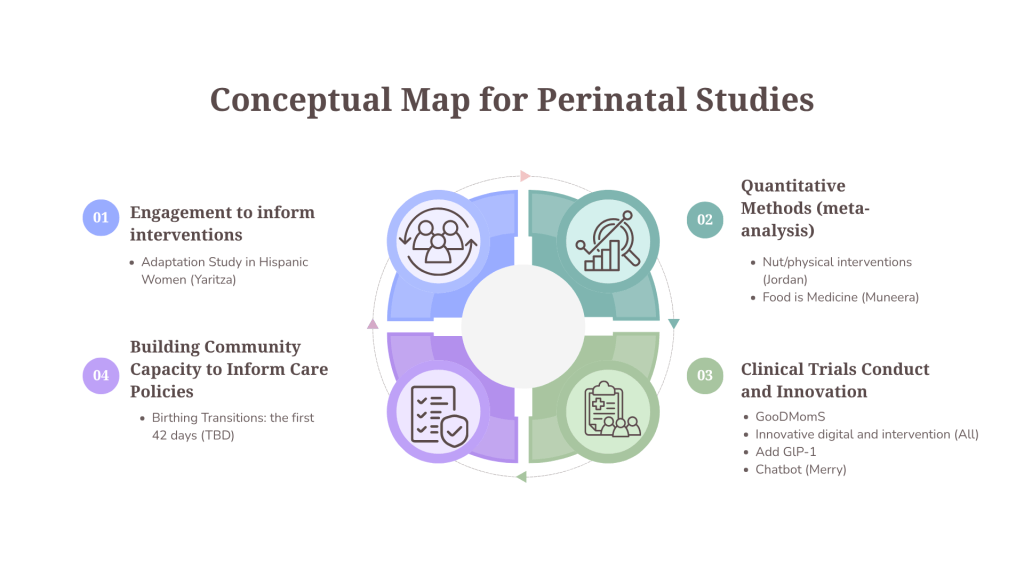
GooDMoms
Sponsor: NIDDK
This study evaluated GooDMomS, a trans-generational web-based intervention designed to help women manage gestational diabetes during pregnancy and maintain healthy lifestyle behaviors postpartum for both mothers and their offspring.
Using a mixed-methods approach, participants were randomized to either the GooDMomS program—which included weekly educational modules, self-monitoring of weight and blood glucose, and peer support—or Usual Care with standard provider guidance. Participants were followed from diagnosis through 8 months postpartum to assess feasibility and maternal and infant outcomes, including glycosylated hemoglobin, postpartum weight loss, gestational weight gain, insulin resistance (HOMA-IR), infant birth weight, and infant growth z-scores.

DIABETESSISTERSVOICES
This study aimed to develop and rigorously evaluate an online platform—the DiabetesSisters Network—to engage women with current or gestational diabetes. The goal was to create a virtual patient community that empowers participants to identify and prioritize topics for patient-centered and comparative effectiveness research.
Our Publications

Read our publications here.
Our Partners
Our research is made possible by the insights and contributions of various partners: academic institutions, researchers, and the community